IVF Medication Guide
By Dr. Caroline Fiddler, founder of CycleGuide
If you’ve been told to start Orgalutran IVF injections, you’ve probably been handed a new syringe, a new schedule, and not much else.
Your clinic has explained the basics. But at some point — often at home, often at night — the questions start.
Why this injection now? What happens if I miss it? Why did my schedule just change?
This article won’t replace your clinical team. It will give you the background most patients wish they’d had before day one.
What Orgalutran Does in an IVF Cycle
Orgalutran (ganirelix acetate) is a GnRH antagonist. That’s the category. Here’s what it means in practice.
During a stimulated IVF cycle, you’re taking FSH medications to grow multiple follicles. The problem is your brain doesn’t know that. Left to its own schedule, it will trigger ovulation before your eggs are ready to retrieve. Orgalutran blocks GnRH receptors at the pituitary gland, which reduces LH release and helps prevent a premature LH surge.
You keep stimulating. The follicles keep growing. Orgalutran holds them there until your clinic decides the timing is right.
When You’ll Usually Start It
In a standard antagonist protocol, Orgalutran is introduced mid-stimulation — typically around day 5 or 6, though your clinic will give you a specific day based on your follicle response.
Starting too early can interfere with stimulation. Starting too late risks a premature LH surge. Your scan results drive the timing, which is why the start date sometimes shifts at short notice.
That last-minute change can feel unsettling. It’s almost always a response to how your body is responding — not a problem.
The Injection Itself
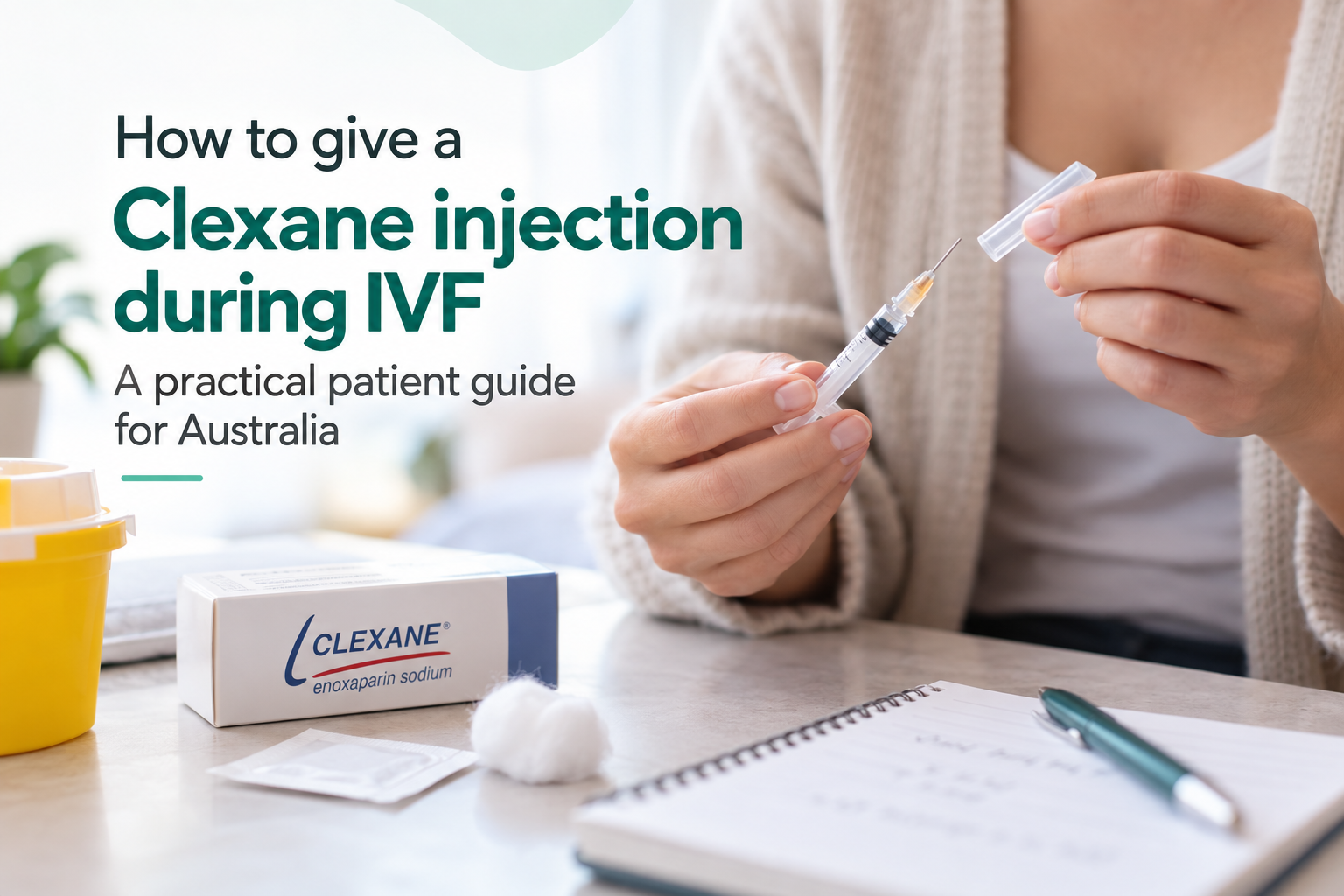
Orgalutran comes as a pre-filled syringe and is given as a subcutaneous injection — just under the skin, usually in the abdomen. Most patients inject it in the morning.
Because it’s pre-filled, there’s nothing to assemble and no dose to dial up. You inject the entire contents in one go. That simplicity matters — fewer steps means less room for error, and less of that low-grade anxiety that comes with handling unfamiliar equipment mid-cycle.
One thing worth knowing: the needle on Orgalutran is longer and thicker than the pens used for Gonal-F or Pergoveris. It takes more pressure to push through the skin, and pulling it out can feel like it’s catching. Keeping the skin taut around the injection site — pinching firmly and holding — makes a real difference. Don’t rush the removal.
It’s once daily. Timing matters. Your clinic will give you a window, and staying within it keeps the hormonal suppression consistent.
Common questions at this stage:
What if I miss a dose or inject late? Contact your clinic for advice. The time between injections — and between the last injection and your trigger shot — should not exceed 30 hours, so don’t delay getting guidance.
Does it hurt? Most patients describe mild stinging or redness at the injection site. This is normal and tends to settle quickly.
Can I inject it myself? Yes. That’s how it’s designed to be used.
Storage — and Why It Feels Strange
Orgalutran is stored at room temperature — below 30°C, not frozen, kept in its outer carton to protect from light. Confirm the details with your nurse, but you do not need to refrigerate it.
If you’ve been through a stimulated cycle before, this feels odd. Almost every other IVF medication lives in the fridge. Orgalutran doesn’t. It’s easy to second-guess yourself, especially in the middle of a cycle when you’re already managing a lot. The instructions are correct — room temperature is right for this one.
Storage also matters for another reason: if you have medication remaining after your cycle ends, it may be usable in a future cycle. Keep it in its original packaging, stored correctly, and check the expiry date and confirm with your clinic before using it again.
The Part No One Really Explains
The medical instructions for Orgalutran are clear. The experience of using it is something different.
By the time Orgalutran is added, you’re already managing one or two daily injections, scan appointments, and a medication schedule that’s subject to change. Adding another step — even a simple one — adds to the cognitive load.
It’s not that Orgalutran is complicated. It’s that IVF during stimulation is a lot to hold in your head. Dosing times. Storage conditions. What to do if something changes. The emotional weight of knowing that every step matters.
That’s where patients most often feel the strain — not with any single medication, but with the accumulation of instructions across the whole cycle.
What the Research Says
Patients on IVF cycles face significant information demands. Managing multiple medications, time-sensitive schedules, and protocol adjustments across a stimulated cycle places real cognitive load on patients — particularly when instructions change at short notice.
The GnRH antagonist protocol — where Orgalutran is used — is now one of the most common stimulation approaches in IVF. The evidence base is strong, particularly around antagonist protocols reducing OHSS risk compared with long agonist protocols without reducing live birth rates in patients with normal ovarian reserve (Toftager et al., 2016; Kolibianakis et al., 2016).
The science is well-established on protocol safety. The day-to-day experience of managing it is where most patients need more support.
How to Make This Easier
A few things that help during the Orgalutran phase specifically:
Write down your injection window. Not just the medication name — the specific time range your clinic has given you. Keep it somewhere visible.
Keep the skin taut. The needle is thicker than most IVF injection pens. Pinch firmly, hold, and remove slowly.
Don’t refrigerate it. Room temperature is correct. Keep it in the outer carton, away from direct light and heat.
Track it as you go. A simple checklist — paper or digital — reduces the mental load of trying to remember what you’ve already done.
Ask before you’re unsure. Questions about timing and dosing are exactly what clinic nurses are there for. There are no small questions during a stimulated cycle.
Try CycleGuide
Built to help patients manage IVF treatment with less mental load. Available on iOS in Australia and New Zealand. 1-month free trial, then AUD $8.99 per month.

Reach Caroline at caroline@cycleguide.com.au
CycleGuide and Medication Tracking
This is the kind of day-by-day management that CycleGuide was built for. I went through IVF myself, and built the app specifically to handle the scheduling, reminders, and instructions that are hard to hold in your head when you’re in the middle of a cycle.
If you’re managing multiple medications across a stimulated cycle, having your protocol in one place helps.
You’re Not Meant to Have This All Memorised
IVF stimulation protocols are designed by specialists and adjusted in real time. The expectation that you’ll absorb all of it perfectly, while also continuing your normal life, is unrealistic.
Most patients doing everything right still feel unsure. That’s not a gap in your preparation. That’s the reality of what this involves.
The goal isn’t to know everything. It’s to have enough clarity, day by day, to take the next step.
References
Toftager, M. et al. (2016). Risk of severe ovarian hyperstimulation syndrome in GnRH antagonist versus GnRH agonist protocol. Human Reproduction, 31(6), 1253–1264.
Kolibianakis, E.M. et al. (2016). Among patients treated with FSH and GnRH analogues for in vitro fertilisation, is the addition of recombinant LH associated with the probability of live birth? PLOS ONE, 11(3), e0175985.
Orgalutran (ganirelix) Australian Consumer Medicine Information. Organon Australia. Available at: safetyandquality.gov.au/medicine-finder/orgalutran-solution-for-injection
Dr. Caroline Fiddler is a medical doctor, IVF patient, and mother. She is the founder of CycleGuide, an IVF treatment organiser app available on iOS. CycleGuide is used by patients in Australia and New Zealand, with UK expansion underway.