Patient Story
By Dr. Caroline Fiddler, founder of CycleGuide
“Why are you still persisting with your own eggs? I can get you some from Greece. Twenty thousand dollars, flights included.”
I was sitting in a beige waiting room in a white theatre gown when a doctor I had never met looked at my file and said that. I didn’t know whether to laugh or cry.
He was about to perform my egg collection. I had never spoken to him before that moment. I sat there, bewildered, saying nothing.
In the recovery bay afterwards, he told anyone who would listen that he had won a prize for the highest number of eggs collected over so many consecutive years that the other doctors had been shamed into disbanding the competition.
But he had, accidentally, done me a favour. At least he had a plan. My own doctor didn’t. That realisation… sitting in a paper gown in a recovery bay… was what finally made me change.
The early years
I started IVF at 38.
I moved back to Melbourne after working in Hobart and found myself at a gathering of university friends… most of them married, most of them with children. I was still working out which medical specialty suited me and which state felt like home.
I saw my GP. Got a blood test that wasn’t optimistic but wasn’t a disaster. Eventually I made it to a fertility specialist, had an ultrasound, and discovered I had a fibroid filling my entire endometrial cavity. I could not have conceived naturally without it being removed. It was removed.
I thought that was the hard part.
The first large clinic I attended handed me an information sheet about costs. The car park was so cramped I had trouble finding a space, and I was so nervous that this small inconvenience felt enormous. The specialist drew a diagram showing each step that could fail… eggs that don’t fertilise, embryos that don’t survive the thaw, transfers that don’t implant.
I sat there thinking: so I’m paying ten thousand dollars for the possibility of absolutely nothing?
Nobody called to follow up. I kept the folder of pamphlets face-down on my desk for months. I never went back.
A phone call changed everything
Years passed. I trained in radiation oncology in Perth, relocated to Wollongong as COVID-19 started, and tried to think about other things.
One afternoon I was on a coffee break on the decking behind the cancer centre when my mum called. She’d run into a medical colleague who’d asked, almost in passing: “Has Caz frozen her eggs yet?”
I stopped walking.
I rang my original fertility doctor’s room that afternoon and booked an appointment.
What followed was not quick.
By the end of that period, I had collected 41 eggs across multiple cycles. Each collection required injections, monitoring scans, and a day procedure under anaesthetic. Each one was another two weeks tethered to a location, another round of waiting, another set of instructions to follow correctly at home. Forty-one eggs is not a footnote. It is years of a person’s life.
A close friend agreed to be my sperm donor. The process required a mandatory quarantine period, counselling sessions, blood tests, and more waiting. When we finally started using his sperm, two embryos formed… neither testable.
When I asked my doctor directly what our plan was, she said most people keep going “until they run out of money or energy.”
I wasn’t sure if she was being dry or honest. Either way, it wasn’t enough.
I sought a second opinion. Finding a specialist who had an actual plan changed everything.
Finally, a plan
For the first time, I felt like someone was looking at my case as a whole.
My new specialist found a thyroid condition that had gone untreated, asked why I had never taken CoQ10 or melatonin for egg quality, and ordered tests nobody had thought to run. She had a short and long-term strategy and updated both as my situation changed.
I hope everyone going through IVF finds a doctor like her.
My 41 frozen eggs were still intact. I had nearly defrosted them earlier… had the forms partly filled out. I didn’t, because I wasn’t sure. Keeping them was the most important decision I made in all of this.
We transferred the two untestable embryos one at a time.
The first resulted in a pregnancy. At six weeks, there was a heartbeat. The following week there wasn’t. The sonographer was gentle and bulk-billed me. I drove back to Melbourne that afternoon and stayed until Sunday.
On the way back I stopped at Doncaster Shopping Centre because there was a sale on and I thought it might help. In the toilets, I realised I was losing the pregnancy. I found a pencil in my bag and did the only thing I could think to do. I called my mum. I felt physically fine. I didn’t know what to feel about anything else.
My team gave me another day off. One nurse said, “come back when you feel ready.” I thought: that will never. I drove to Ballarat, went to the art gallery, and drove back. Eventually I went back to work.
Alice
The second embryo was described as “hatching” before transfer. I brought a plastic pocket to protect the paper photo. Everyone laughed. It broke the tension in a room that needed it.
The pregnancy tests turned positive. Gradually, then clearly. The formal blood test confirmed it. At six weeks the ultrasound showed a shape with limb buds, a head, a heartbeat.
In the theatre, my mum cut the cord.
My daughter Alice is two years old. She is bright and busy.
She is also the reason I finally realised how much of IVF happens outside the clinic walls.
Looking back, I realised one of the hardest parts of IVF wasn’t the medicine itself. It was managing treatment at home… the instructions, the changes, the things nobody tells you. That realisation became CycleGuide.
Built by a patient
I built CycleGuide while I was still a patient.
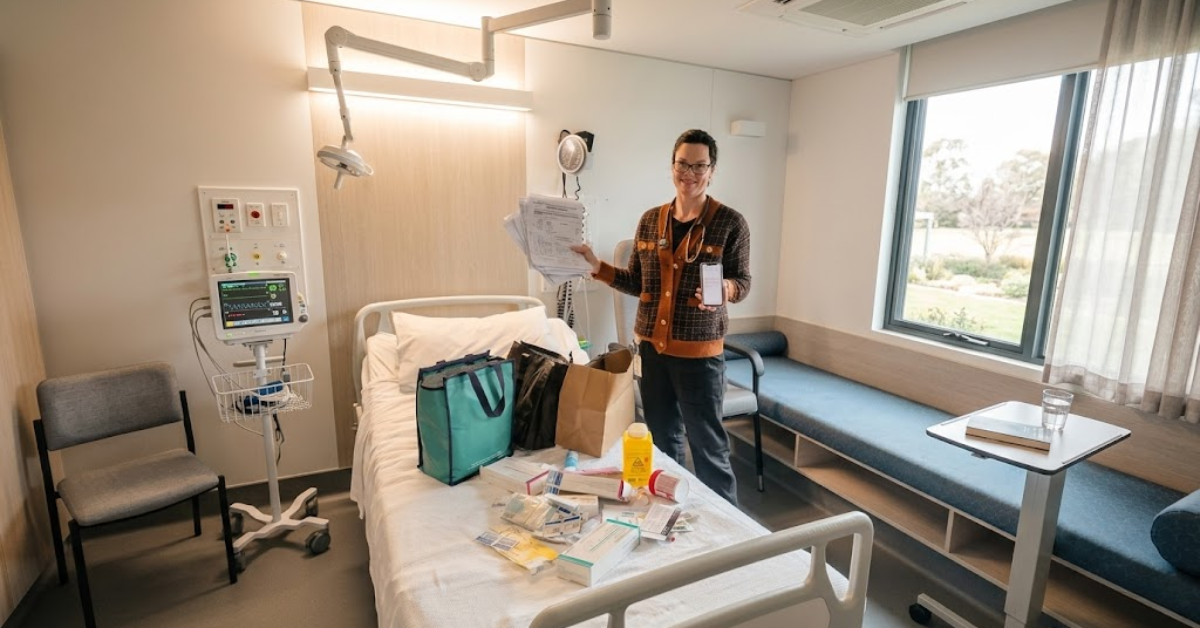
I spread my paper treatment instructions across the table at the first meeting with the app developers in Richmond so the designer could see what I was working with. That session became the first version of what CycleGuide is now.
The problem was never the medicine. IVF is precise… carefully selected medications, skilled procedures, exact embryology. The clinical care I eventually received was thorough and considered.
The problem was what happened between the clinic and my kitchen bench.
Nurses call mid-cycle with updated instructions. Instructions change based on daily blood results and scans. You might miss the call. You call back, find somewhere private, verify your identity, then write down whatever they tell you on the nearest piece of paper… and hope you don’t lose it, misread it, or forget it by the time it matters.
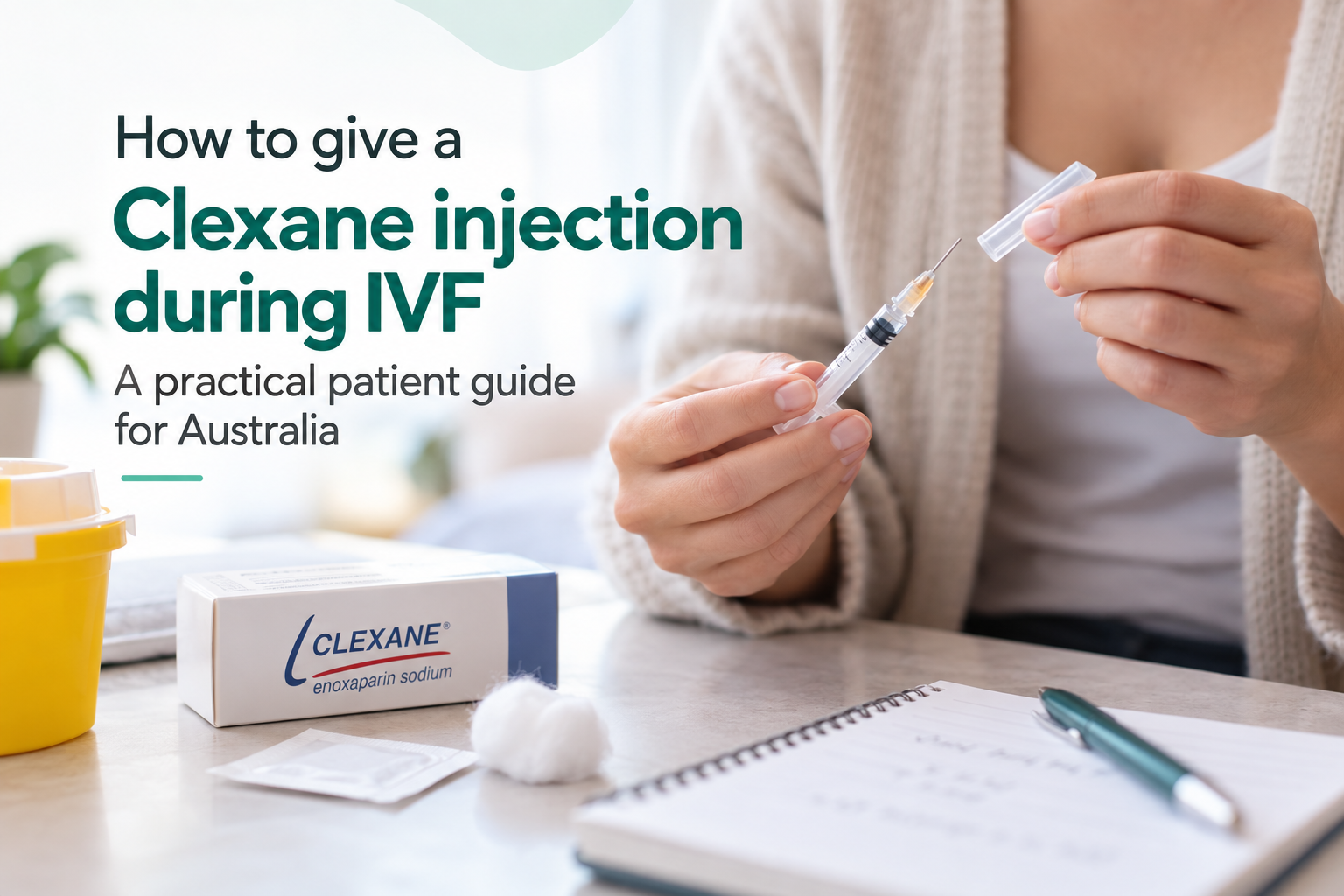
I once injected myself repeatedly trying to get the last residue of liquid out of the needle hub. I knew it was probably fine. I couldn’t stop myself. Nobody had told me what that last little bit meant, or that it didn’t matter.
Specialist pharmacies have limited hours. You need to collect medications before Day 1 without knowing exactly when Day 1 will arrive. If it falls on a Saturday, your protocol may require starting the following morning. Some clinics are closed Sunday.
IVF tethers you to one location for months. I didn’t know that large clinic networks offer monitoring across multiple sites. I travelled more than I needed to and took more time off work than necessary. Nobody mentioned it.
These are not failures of medicine. They are failures of information reaching patients at the right time, in a form they can actually use.
What I built
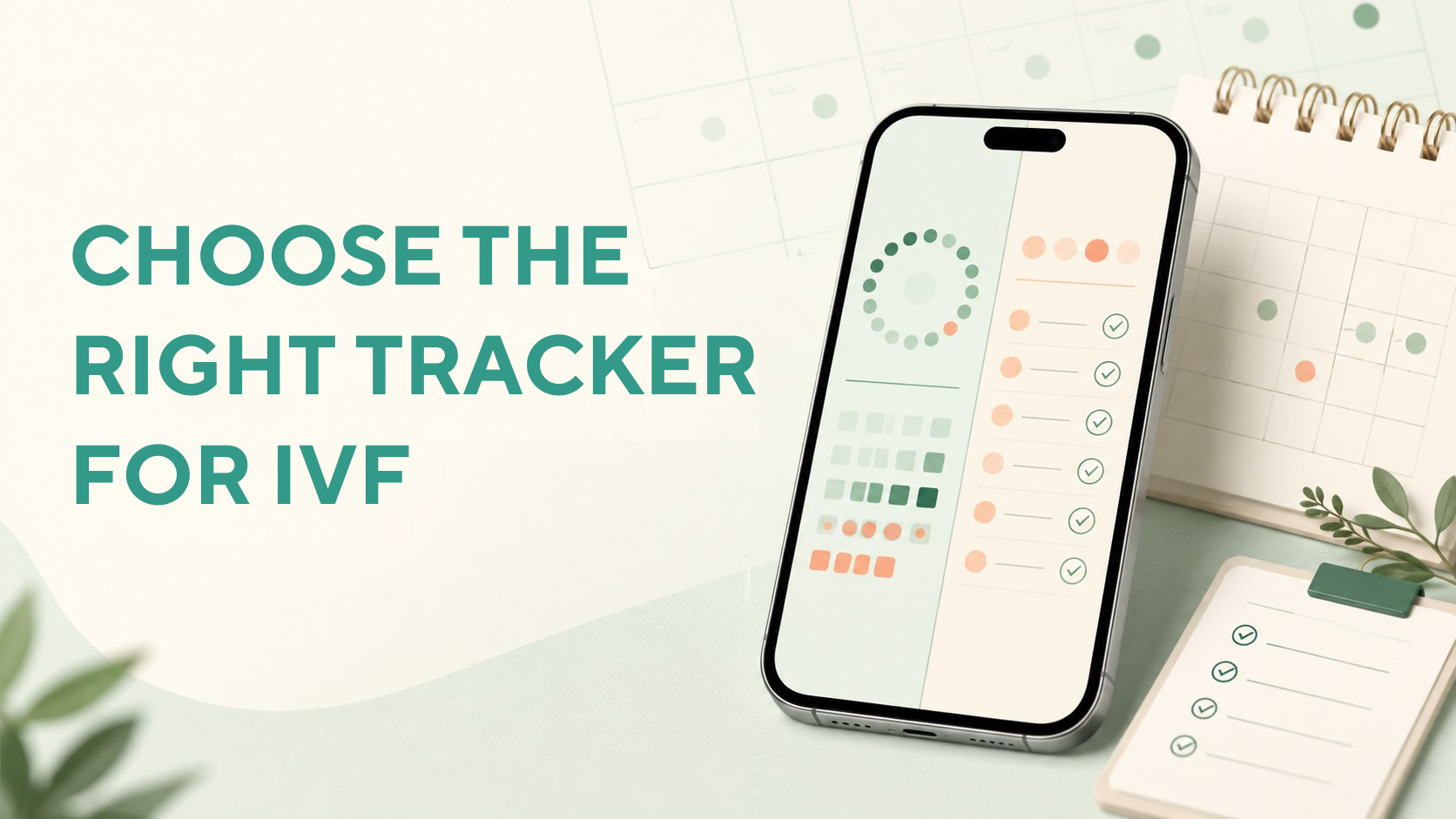
CycleGuide started as a standalone app… patients download it and enter their own instructions when their nurse calls. Since then we’ve built a clinic integration layer that pushes treatment plans directly from clinic systems to patients’ phones, so instructions arrive the moment the clinical team sends them.
I built it because patients need practical support at home, not just in the consulting room. Fertility professionals deserve to know their instructions actually reached the person who needed them… clearly, correctly, on time.
The paper instructions I received were thorough. The format was not.
That is a solvable problem. So I solved it.
Dr. Caroline Fiddler is a medical doctor, IVF patient, and mother. She is the founder of CycleGuide, an IVF treatment organiser app available on iOS. CycleGuide is used by patients in Australia and New Zealand, with UK expansion underway.