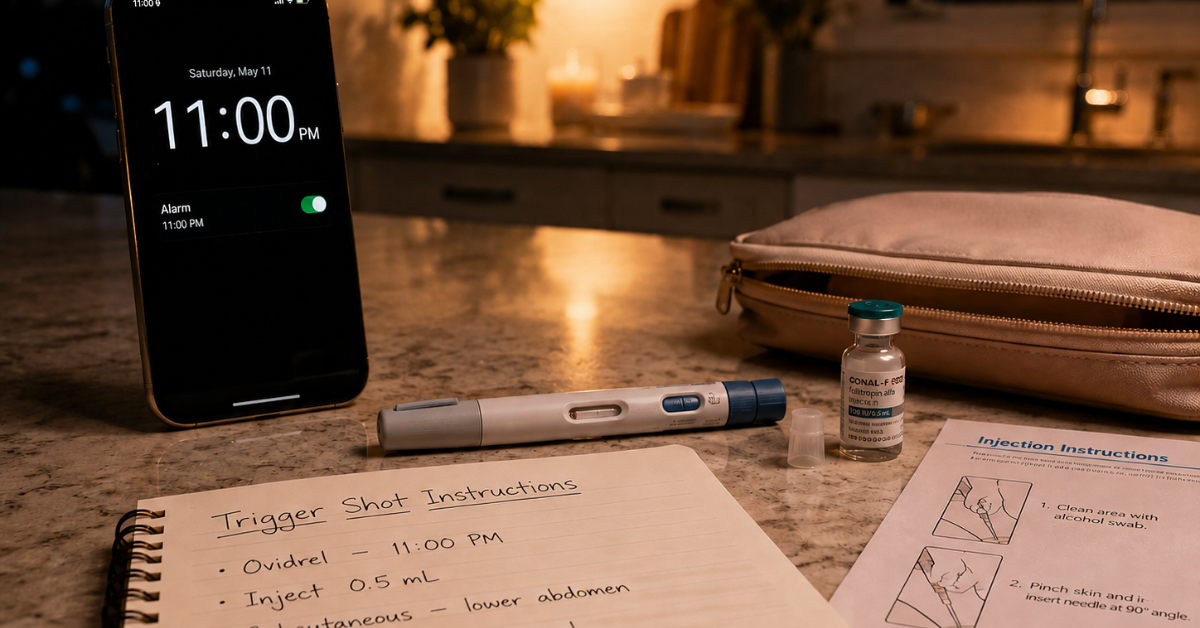
You’re standing in the kitchen at 11pm. The instructions say to give the injection at exactly 11pm. Not 10:30pm. Not 11:30pm. 11pm.
You wonder whether two minutes late last night actually mattered. You wonder whether it matters right now.
Two Categories of IVF Medication Timing
IVF protocols typically involve multiple medications, given at different points across the cycle. They fall into two broad categories when it comes to timing.
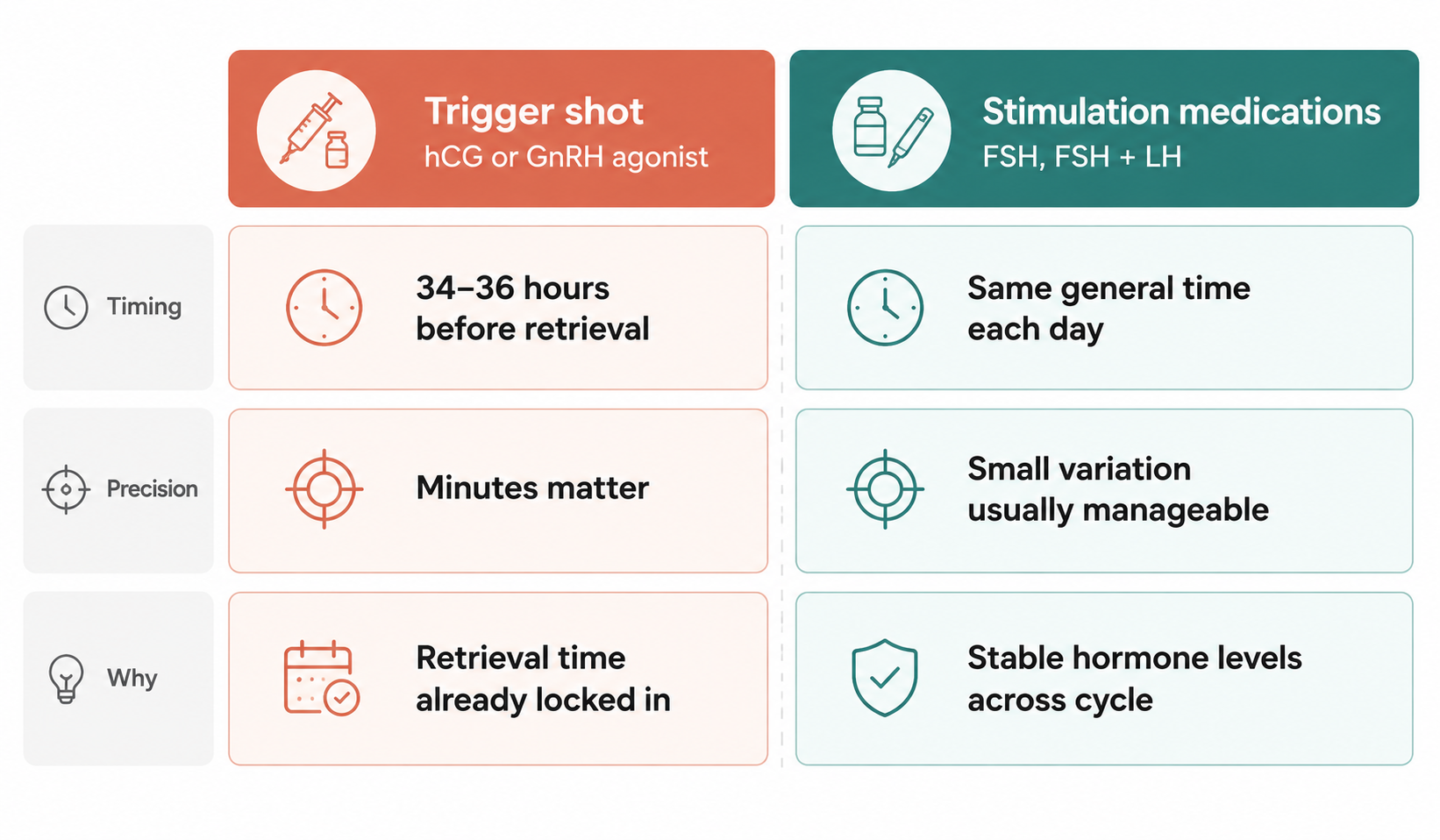
High precision: medications where the exact time of administration is clinically significant, and variation of even a few hours can affect outcome.
Consistent but flexible: medications where taking them at roughly the same time each day matters for maintaining steady hormone levels, but a variation of an hour or two is unlikely to affect the cycle.
Knowing which category each medication falls into changes how you experience the protocol.
The Trigger Shot: The One You Cannot Miss
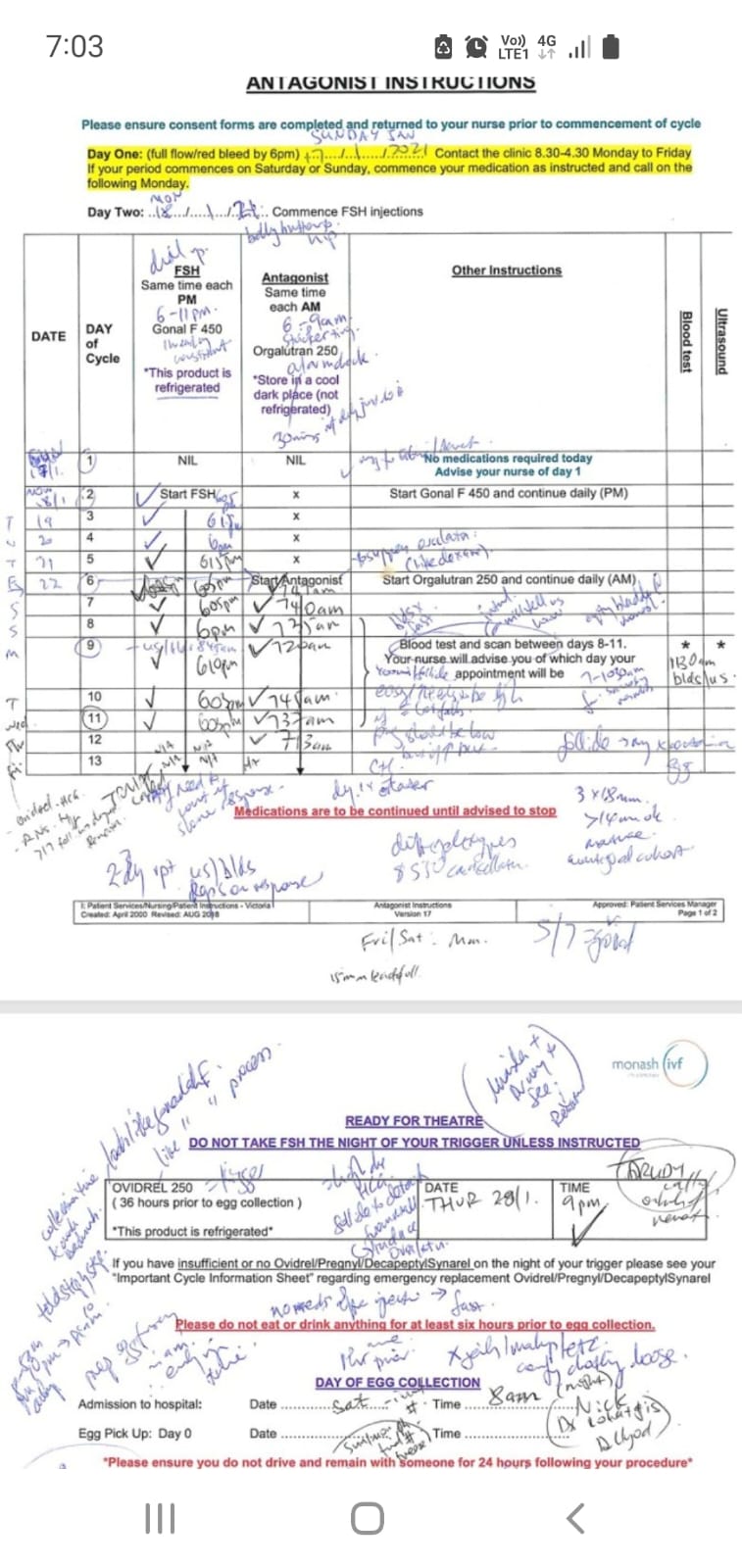
A real protocol sheet. Ovidrel 250 at 9pm Thursday. Egg collection Saturday 8am.
The most time-critical medication in an IVF cycle is the trigger shot. In Australia, this is commonly Ovidrel (choriogonadotropin alfa), or in some protocols a GnRH agonist, sometimes both.
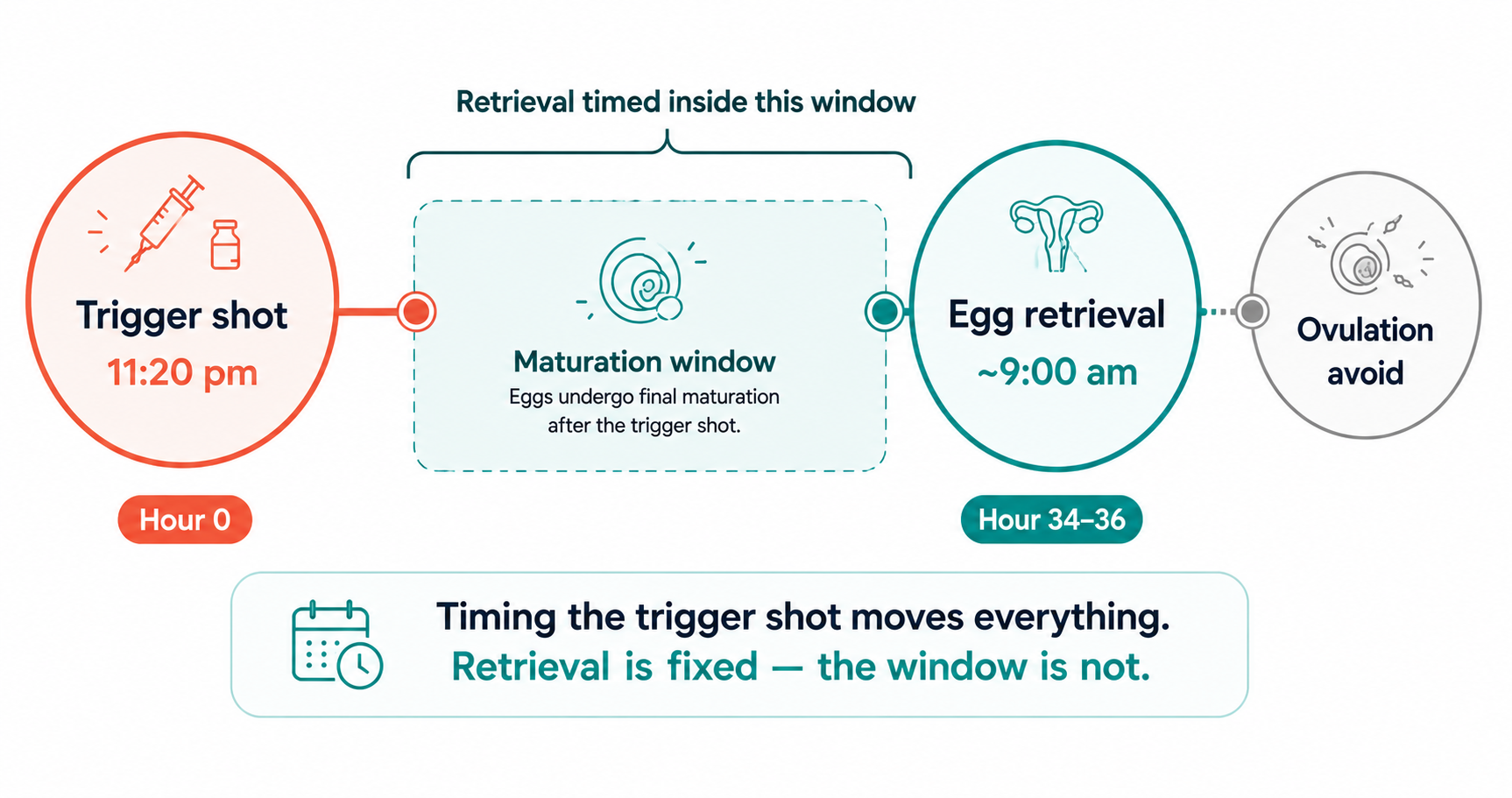
The trigger shot initiates the ovulation process, signalling the follicles to complete final egg maturation. In an IVF cycle, where hormones are tightly controlled, the trigger replaces the natural LH surge and allows the clinic to schedule egg retrieval with precision.
In Australia, egg retrieval is scheduled exactly 36 hours after the trigger injection. Trigger times are given in half-hour increments — 10:30pm or 11pm are common examples. A Monday night trigger at 11pm corresponds to a Wednesday egg retrieval, with hospital arrival at 10am and theatre booked for 11am.
That specificity is not administrative preference. It reflects the biology. The trigger activates the ovulation process — retrieval is timed to collect the eggs just before they are released. If the trigger is given too early relative to the scheduled retrieval, ovulation may occur beforehand and eggs can be lost. If given too late, eggs may not have reached full maturity by the time retrieval takes place.
Your clinic gives you an exact time because the retrieval theatre booking, fasting instructions, and hospital arrival time are all built around it.
Stimulation Medications: Consistent, Not Obsessive
The daily stimulation injections — typically FSH (such as Gonal-F) or a combination of FSH and LH — work differently. Their role is to maintain a steady hormonal environment that supports follicle growth across the stimulation phase, which usually runs 8 to 14 days.
These medications benefit from being given at the same time each day, but the reasoning is about consistency of hormone levels rather than a precise physiological event timed to the minute. A small variation is usually manageable, though always check with your clinic if you are unsure.
Missing your stim injection by 45 minutes because you were in a meeting is not the same as giving your trigger shot 45 minutes late. The first is a minor variation in a long-cycle medication. The second is a meaningful timing error in a once-per-cycle injection that determines when retrieval can happen.
If you are unsure about a variation with your stimulation medications, contact your clinic. The anxiety these variations generate is often disproportionate to their clinical significance.
The Most Common Timing Errors Patients Make
IVF medication errors are not caused by carelessness. They are caused by protocol complexity meeting the demands of real daily life.
Trigger shot timing drift.
Patients adjust the time by an hour or two based on convenience, not realising the retrieval theatre is already booked. If your retrieval is at 11am Wednesday, your trigger was set for 11pm Monday. Changing when you administer it does not move the retrieval. It moves the window out of alignment.
Confusing stimulation medications with the trigger.
Gonal-F and similar FSH medications are used during the stimulation phase. Ovidrel (or your clinic’s prescribed trigger) is the injection that initiates ovulation. They are different medications with different roles. Check your protocol sheet carefully — they are not interchangeable.
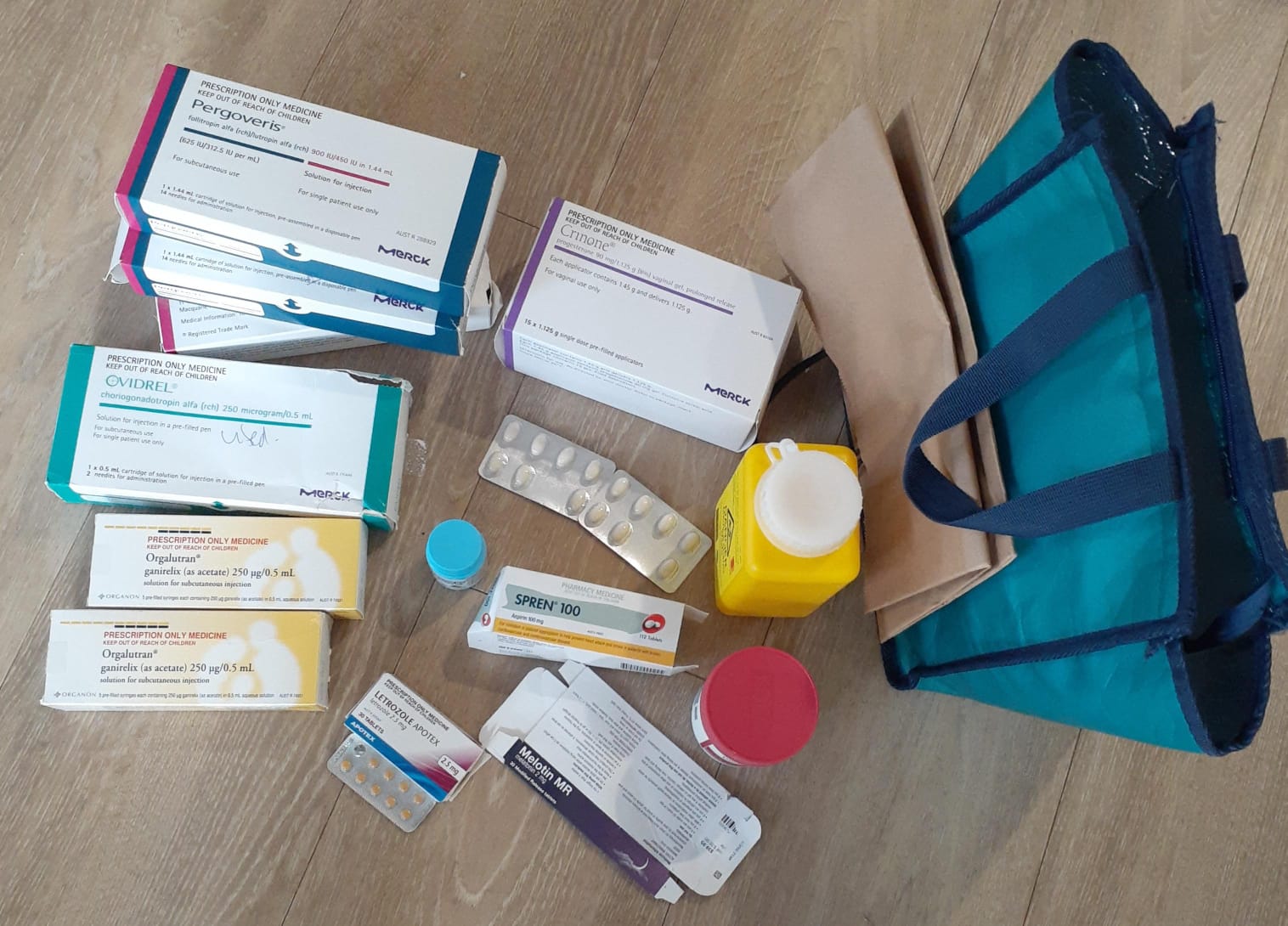
Pergoveris and Orgalutran are stimulation medications. Ovidrel is the trigger. Different roles, different timing rules.
Storing medications incorrectly.
Several IVF medications are temperature-sensitive. Storage requirements vary by medication, brand, and country, so patients should follow the label and their clinic’s instructions exactly. A medication stored incorrectly may lose potency without any visible change in appearance.
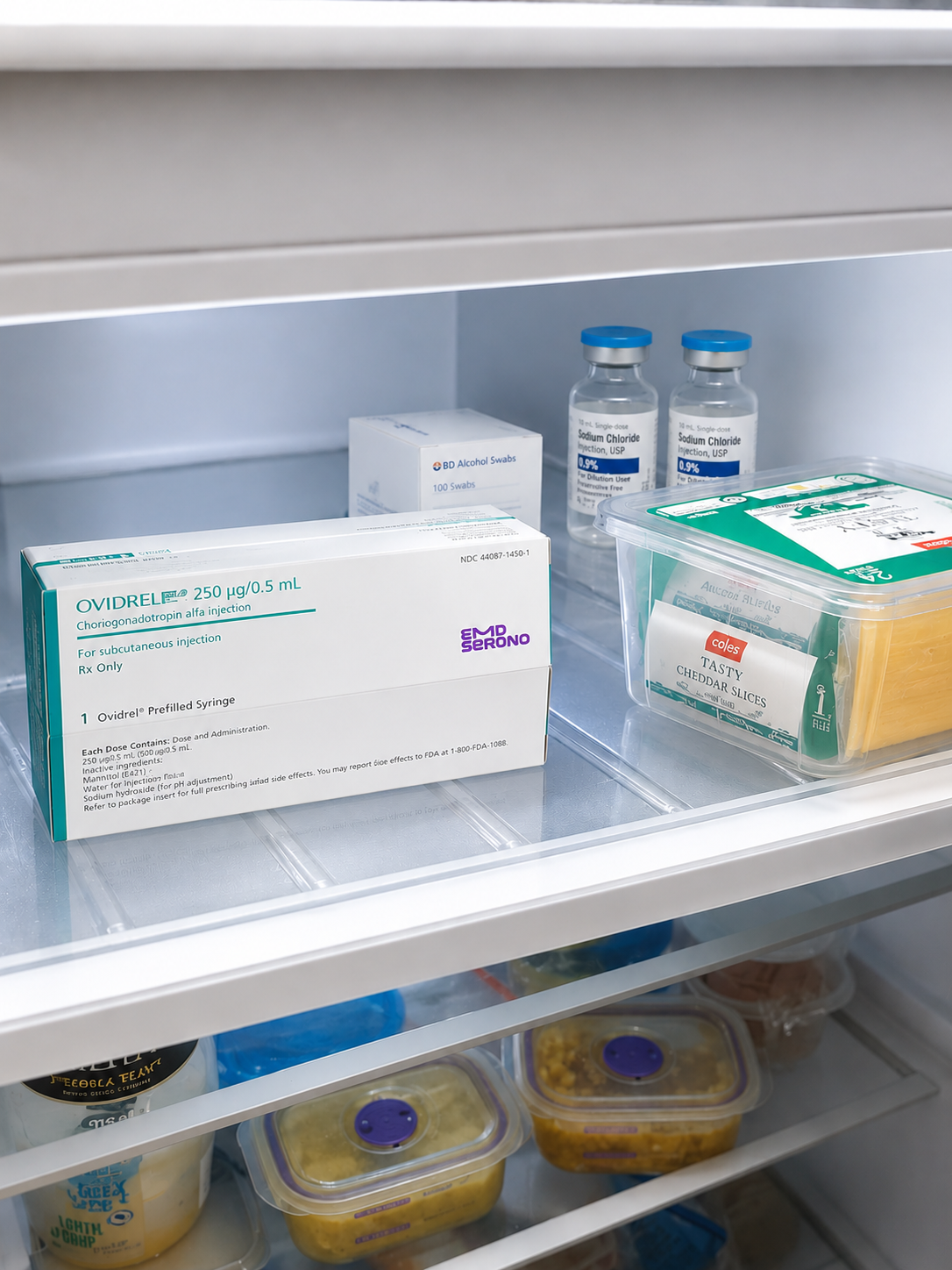
Ovidrel in the fridge — right where it should be. Always check the label.
Missing the dual trigger.
Some protocols use both hCG and a GnRH agonist as a combined trigger, administered at the same time or a few hours apart. Patients occasionally take one and not the other, either through misreading the instructions or believing one is optional. Both are required for the protocol to function as intended.
Skipping or halving a dose on a hard day.
Stimulation medications cause side effects: bloating, discomfort, mood changes. On a physically difficult day, some patients reduce or skip a dose. Worth avoiding without speaking to the clinic first.
Why Errors Happen More Than Patients Expect
IVF self-injection is genuinely demanding. Patients manage multiple injections, doses, and storage requirements at home, under stress, across weeks. A nurse explains the protocol in the appointment. At home three days later, under a different kind of pressure, the details blur.
The gap between receiving instructions and executing them correctly reflects the design of the protocol, not the capability of the patient. Reducing errors is less about trying harder and more about building better external systems: written day-by-day schedules, timed reminders, a second person checking the trigger shot time, and a clear line to the clinic for questions.
What to Do If You Think You Made a Timing Error
Contact your clinic. Do not wait and hope.
For stimulation medications, minor variations are usually manageable and your team can advise you. For the trigger shot, the clinic needs to know immediately. The retrieval time may need to be adjusted, or the trigger may need to be readministered in some cases.
Patients frequently delay contacting their clinic out of embarrassment or fear that they have damaged their cycle. The delay compounds the problem. Fertility nurses and coordinators handle these calls regularly. The call is not unusual. The hesitation to make it is.
Before every injection
Check your written day-by-day schedule
Not your memory. The actual schedule. Confirm which medication, which dose, which time.
Set a timed alarm, not a reminder
Reminders are easy to dismiss. Set an alarm that requires you to stop and act.
For the trigger shot, have a second person verify the time
One person reads the instructions. The other confirms the clock. Both check.
Check medication storage before you need it
Storage requirements vary by medication and brand. Follow the label exactly, not what you remember from last time.
Have your clinic’s number saved and accessible
If something goes wrong, call immediately. Don’t wait, don’t search. The number should be one tap away.
For dual trigger protocols, confirm both medications
Both hCG and the GnRH agonist are required. Neither is optional. Check both are prepared before you start.
A Note on Structure
The protocol needs better organisation, not simplification.
After going through IVF myself, that’s what became clear. Day-by-day clarity, medication reminders, written instructions that don’t require reconstructing from memory at midnight.
That’s part of what I built CycleGuide to address, a single place where your protocol is structured day by day, with reminders for the injections that matter most.
You Are Not the First Person to Get This Wrong
Timing errors in IVF are common. They happen to patients who are organised, informed, and trying hard. They happen to doctors who know exactly what the medications do.
The protocols are complex. The stakes feel enormous. Both things together make clear thinking harder.
Know which errors actually matter. Build systems to catch them. Call your clinic early.
References
- Fertility Centers of New England. What Is a Trigger Shot in IVF? fertilitycenter.com
- Fertility NJ. Trigger Shots in IVF: Purpose, Timing & What to Know. fertilitynj.com
- Dandi Fertility. The IVF Trigger Shot Explained: Timing, Placement, and Side Effects. dandifertility.com
- Verhaak, C.M. et al. (2005). A longitudinal, prospective study on emotional adjustment before, during and after consecutive fertility treatment cycles. Human Reproduction, 20(8).
- American Society for Reproductive Medicine (ASRM). Medications for Inducing Ovulation. reproductivefacts.org
Try CycleGuide
Built to help patients manage IVF treatment with less mental load. Available on iOS in Australia and New Zealand. 1-month free trial, then AUD $8.99 per month.

Reach Caroline at caroline@cycleguide.com.au